
Pothos, also known as the Devil’s Ivy, is a low-maintenance houseplant that can thrive in both soil and water. However, if you decide to keep your Pothos in water, it’s important to remember to off-gas the chlorine in the tap water and to not use solid fertilizers. It’s also essential to maintain the right moisture level, provide adequate light and humidity, and watch out for root rot, leaf spots, and leggy growth. Keep reading to find out how to care for your Pothos and keep it healthy and beautiful!
Reviving a Droopy Pothos Plant
Reviving a droopy pothos doesn’t have to be difficult. In most cases, the cause of the drooping is a lack of humidity in its environment. To help your pothos recover, you can increase humidity around it by misting its leaves with a spray bottle or using a humidifier nearby. Alternatively, you can place a pebble tray with water near the plant as this will also increase humidity.
In some cases, the cause of the drooping can be attributed to a combination of low light and over-fertilization. Pothos plants are known to become leggy if they don’t receive enough light or if they are given too much fertilizer. Additionally, mature pothos plants can start getting leggy if there is nothing for them to climb on. Certain varieties of pothos tend to be more prone to developing a leggy growth pattern than others.
However, if your pothos is drooping due to overwatering, you can take steps to save it. Overwatered pothos are easily recognizable as they typically have yellow and brown leaves, rotten roots, and mold in the soil. The first step towards saving your overwatered pothos is to recognize that it has been overwatered.
How to Save an Overwatered Pothos
The most important thing to remember when it comes to saving an overwatered pothos is that a consistently moist soil is the key. You don’t want to be over or underwatering your plant. The best way to determine when you should water your pothos is when the top 2” to 3” of the soil has dried out. If you let your plant’s soil dry out completely, this can cause its leaves go limp, droop, and start to brown.
If you notice that your pothos has discolored or mushy roots, this could be a sign of root rot. The roots of a plant with root rot will appear discolored and may fall off easily when touched. You can also tell if your pothos has root rot by the smell it gives off; there will be an unpleasant odor coming from the soil, whereas healthy roots do not have any scent.
How to Give Your Pothos the Right Amount of Sunlight
Aside from overwatering, another common cause of droopy pothos is inadequate sunlight. While all types of pothos need some amount of light to survive, Golden Pothos prefer bright indirect sunlight in order to thrive. If the plant does not receive enough sunlight, its leaves will become pale and small. On the other hand, it’s important to note that too much direct sunlight can be damaging for this type of pothos as it can cause sunburns on its leaves.
How to Revive a Droopy Pothos Plant
Do pothos wilt when they need water? Most likely your plant is under-watered, if your pothos leaves are smilng or drooping. This can be checked by touching the soil or lifting the plant up to see if it feels light. It needs a good drink if that’s the case.If you have determined that your pothos is indeed under-watered, then it will need to be watered thoroughly in order to revive its droopy leaves and stems. Before doing so, however, it’s important to make sure there are no signs of root rot as this can lead to further problems down the line. To check for root rot, look for any discolored or mushy roots and also smell for an unpleasant odor coming from the soil which would indicate root rot present in the potting mix. Once you have confirmed there is no sign of root rot present in your pothos’s potting mix, then you can proceed with giving it a good soak of water until excess liquid starts draining from its bottom drainage holes. Depending on how dry its soil was before watering and how much moisture content is already present in its environment, this may take anywhere from 1 – 3 hours for all excess liquid to drain out completely so make sure not leave your plant sitting in standing water during this process as overwatering should still be avoided at all costs!
The best way to ensure that your pothos is getting the right amount of water without causing any leaf spots from splashing water is by bottom watering. This involves placing a shallow tray with some water in it, and then setting the pot containing the plant in it so that its roots can absorb moisture from below.
Another option is to keep your pothos in water forever. Pothos can live in water for the rest of their lives as long as you change the water every 2-3 weeks or whenever it looks foggy and make sure that they receive adequate lighting.
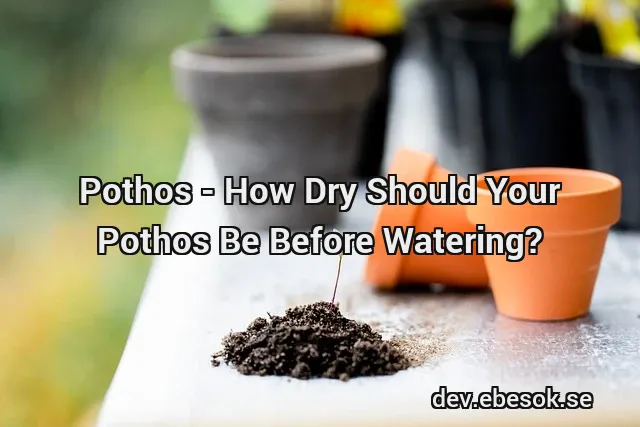
When it comes to how dry your pothos soil should be before watering, it’s a good idea to let the soil dry out between waterings. When you poke your finger in the soil, it should feel dry and you should look for a moisture level of 2-3 using a moisture meter when determining whether your pothos is ready to drink.
In terms of using tap water for your pothos, it can thrive in tap water but you’ll need to make sure that there is no chlorine present in the water. If this is the case, leave it out for at least 24 hours in an open container and then pour it into your vase. When feeding your pothos plant, don’t use solid fertilizers.
Conclusion
In conclusion, Pothos can be a very easy-care houseplant, as long as you are aware of their needs. This article has summarized the care requirements for Pothos and how to keep them healthy and thriving. Tap water should be left to off-gas chlorine for at least 24 hours and should not contain solid fertilizers. The soil should be watered when the top 2” to 3” of the soil is dry and should not be allowed to dry out completely. Additionally, Pothos should be kept in bright indirect sunlight and should be misted with a spray bottle or placed near a humidifier if the humidity is too low. With proper care, your pothos will be a healthy, vibrant addition to your home for years to come.